

Primary Areas of Focus

Trauma, PTSD, and Complex Trauma
Trauma is an experience—or series of experiences—that overwhelms our ability to cope and can affect how our brain, body, emotions, and relationships respond afterward. Trauma responses are often protective responses that have continued even though the original danger has passed… often like the “yuck is stuck”. If you are feeling triggered often or experiencing trauma responses, I can help you find ways to help regulate your nervous system and/or process your trauma in a safe and healthy way and space.
Anxiety/Depression
Hypervigilence, On guard
Easily startled
Restlessness, feeling keyed-up
Sleep disturbances
Difficulty concentrating
Nightmare and/or Flashbacks
Avoidance
Emotional numbness, feeling detached
Difficulty experiencing positive emotions

Chronic Pain and Illness/Mystery Illness
Are you suffering from chronic pain or illness? Do you have an autoimmune disorder that is invisible to the outside world? Or maybe you have a “mysterious illness” that doctors haven’t been able to find a name for? While I am not a doctor and do not provide medical advice, I have both personal experience in navigating the world of mysterious illness along with professional experience in helping clients process the fears, frustrations, and the emotional rollercoaster of seeking answers while still living a balanced life. If you are looking for a safe space to process what you are feeling about your illness and/or are interested in exploring the mind/body connection, I would be honored to listen and encourage you on this journey.
Chronic Pain
Chronic Illness
Chronic Symptoms
Mystery Illness/Symptoms
Medical Trauma
Grief over Health
Adjustment/Change

Anxiety, Overwhelm, Nervous System Dysregulation
Are you feeling overwhelmed more often than you feel calm? Or does that buzzing anxiety seem to be your baseline state? If you so, you may be dealing with a dysregulated nervous system. In a world where busyness is praised and noise rarely stops, a dysregulated nervous system is becoming more common. BUT, it doesn’t have to your norm. There are techniques and strategies we can implement to calm and/or reset your nervous system and get you back to feeling like yourself again!
Common Signs of a Dysregulated Nervous System:
Physical: Constant tiredness, sleep issues, headaches, & stomach issues
Emotional: High anxiety, panic, irritability, or feelings of deep numbness
Mental: Brain fog, poor memory, and trouble focusing
Main Causes:
Long-term stress and burnout
Past emotional or physical trauma
Lack of quality sleep
Underlying medical issues or pain
Therapeutic Services
Eye Movement Desensitization and Reprocessing
Eye Movement Desensitization and Reprocessing (EMDR) helps your brain and nervous system work through experiences that may still feel “stuck” in the past. Using bilateral stimulation, such as eye movements or tapping, EMDR can help painful memories, emotions, and body sensations feel less intense—so past experiences have less power over how you feel in the present.
Click below to WATCH a video about EMDR:
https://youtu.be/IDpkvDWNAaM?si=_16qjcZ_dZnG1n_6
Click below to WATCH a video about EMDR:

Pain Reprocessing Therapy (PRT)
PRT is a way of helping your brain and body change the way they respond to pain. When pain has been around for a long time, the nervous system can become more sensitive and start responding as if there is danger, even when the body is actually safe. That doesn't mean the pain isn't real. It means your brain may have become very good at protecting you—and sometimes it can become overly protective.
Together, we will look at how pain, fear, stress, attention, and the nervous system can interact. We’ll practice noticing sensations without immediately assuming they mean something is wrong, and we’ll gradually build new experiences of safety. Think of it as helping your brain update its alarm system. The alarm is real, but it may be going off too easily… like a smoke alarm that goes off from steam in the shower. We're working on teaching the alarm when it needs to go off and when it can stand down.
The goal is to help you feel less afraid of your symptoms, feel more confident in your body, and ultimately reduce the impact that pain (or other symptoms) has on your life.

Emotional Awareness and Expression Therapy (EAET)
Sometimes, when we’ve been through stressful, painful, or overwhelming experiences, we learn to push certain feelings away, keep the peace, stay strong for other people, or avoid emotions that feel uncomfortable. Those strategies may have helped us get through difficult situations, but over time, emotions that haven’t been acknowledged or expressed can continue to affect us.
EAET helps us explore those emotions and understand how they affect your thoughts, body, relationships, and behavior. We practice recognizing and expressing emotions in a safe, constructive way so they don't have to stay bottled up or come out in an unhealthy way.

Somatic Internal Family Systems (IFS); “Parts Work”
Somatic Internal Family Systems (IFS) is a gentle, body-centered approach that helps you build a more compassionate relationship with yourself. IFS recognizes that we all have different “parts” of us—parts that worry, overthink, push, protect, shut down, people-please, or try to keep everything under control. Rather than trying to get rid of these parts, we approach them with curiosity and begin to understand what they’ve been working so hard to protect.
Somatic IFS brings the body into this process. By slowing down and noticing sensations, emotions, impulses, tension, or shifts in your nervous system, we can listen to what your body and your parts are communicating—without forcing change. As protective patterns begin to feel understood and safe, there is often more room for your natural sense of calm, curiosity, compassion, clarity, and connection to emerge.
Supplemental Services

Counseling from a Biblical Perspective
For many of us, our faith and spirituality are the foundation for how we live our lives. Are you interested in integrating a Christian perspective into your counseling sessions? Maybe you aren’t sure what you believe and you’re searching for answers? It’s possible you know what you believe, but it’s been awhile since you’ve felt God’s presence, or you may feel stagnant in your faith journey. Whatever the case may be, if you’re struggling with your faith walk, I’d be honored to help you explore this and to point you to Jesus.
**I enjoy staying informed through biblically based mental health training and continuing education through the American Association of Christian Counselors (AACC), along with keeping up with the latest research through the Mental Health Grace Alliance.
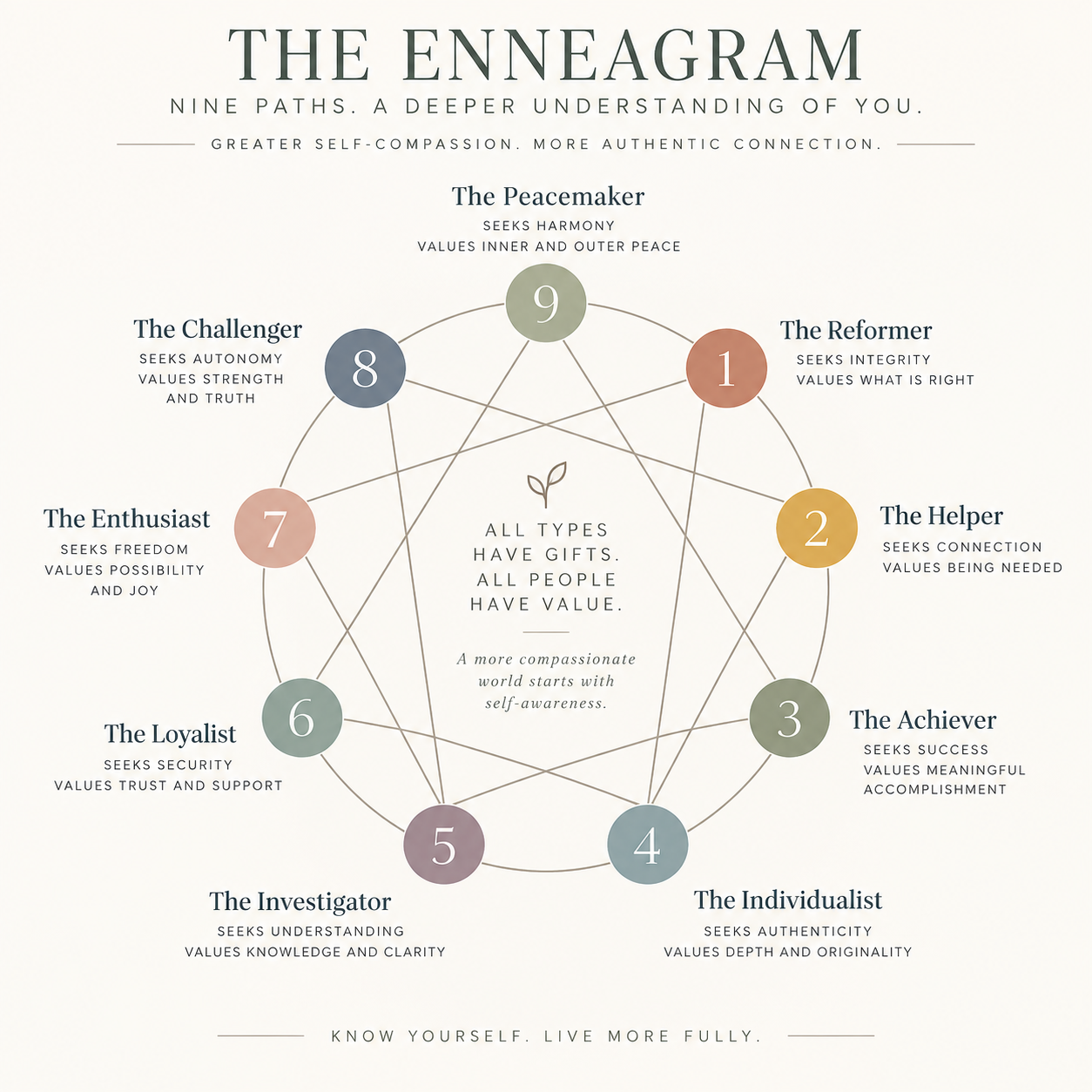
Trauma-Informed Enneagram Integration
The Enneagram can offer a compassionate framework for understanding the patterns you developed to navigate relationships, emotions, stress, and the world around you.
When approached through a trauma-informed lens, the Enneagram isn’t about putting you in a box or telling you who you are. Instead, we use it with curiosity to explore the beliefs, protective strategies, and automatic patterns that may have once helped you feel safe—but may no longer serve you in the same way.
Together, we can notice how these patterns show up in your thoughts, relationships, emotions, and nervous system while making space for the experiences that shaped them. Rather than trying to change or “fix” your personality, the goal is to develop greater awareness, compassion, and choice.
When you understand why your patterns are there, you can begin responding from who you are—not simply from what you learned you needed to be.

Rest and Restore Protocol (RRP)
Rest & Restore Protocol (RRP) is a therapeutic listening program designed to support nervous system regulation and increase the body’s capacity to experience safety and resilience. Using specially filtered music, RRP provides gentle, repeated opportunities for the nervous system to practice shifting out of patterns of stress, protection, and overwhelm.
RRP can be used alongside therapy to support greater regulation, emotional flexibility, and connection with the body.
**RRP is used as a supplement to counseling and includes an additional listening subscription cost not covered by insurance.
Click HERE to learn more about RRP.